



New Orleans
IT Support for Mid-City New Orleans Businesses
Mid-City covers the area around City Park, Bayou St. John, and the Tulane Avenue medical corridor. It's genuinely different from the Quarter, the CBD, or Uptown — Mid-City is where you find LSU Health Sciences Center, University Medical Center, the VA hospital, dozens of medical and dental practices clustered along Tulane Avenue, plus a growing base of small businesses in Faubourg St. John and along North Carrollton. The neighborhood was devastated by Katrina flooding and the post-storm rebuild left a mix of new construction sitting next to original early-1900s shotguns. The IT we deliver in Mid-City reflects that mix: heavy-duty HIPAA compliance for the medical corridor, post-Katrina flood-zone planning, and small-business support for the growing Mid-City entrepreneurial scene.






Services
Our IT Services
We deliver business-critical IT solutions designed to protect your operations, support your growth, and eliminate downtime. Whether you're a construction firm, contractor, or a compliance-driven organization, our services are built to work the way your business does: fast, secure, and reliable.

Cybersecurity Services
Get true end-to-end protection against today's evolving threats. From firewalls and endpoint protection to email filtering and employee training, our cybersecurity stack is built around your workflows—so you're always secure without compromising productivity.

Managed IT Services
Our all-inclusive managed IT services provide ongoing support, monitoring, patching, and issue resolution—so you can focus on building your business, not fixing tech problems. We prevent issues before they impact your productivity.

Co-Managed IT Services
For companies with internal IT staff, our co-managed services offer the perfect partnership. We provide additional tools, advanced expertise, and scalable support—helping your team focus on strategic initiatives without burning out on daily support tickets.
Cloud Services
We help businesses transition to the cloud with purpose. From secure file sharing and scalable storage to cloud-based infrastructure and app hosting, our cloud solutions are designed to improve performance, boost mobility, and cut costs.

Phone Systems
Our phone solutions deliver enterprise-quality voice systems at a fraction of the cost of traditional phone lines. We handle design, implementation, call routing, and support—ensuring clear, reliable communication no matter where your team works.

Microsoft 365 Services
We make Microsoft 365 work harder for your business. From email migration to Teams collaboration and SharePoint optimization, we manage your licenses, support your users, and secure your Microsoft environment from end to end.
Business Video Surveillance Systems
Our surveillance systems go beyond basic camera installs. We provide intelligent, high-resolution video monitoring tailored for commercial environments, job sites, and high-risk areas—complete with real-time alerts, remote access, and secure footage storage.

Disaster Recovery Planning
Disasters don't wait—and neither do we. Our disaster recovery services ensure that critical data, applications, and systems are backed up and recoverable quickly, so you can bounce back from any event without extended downtime or data loss.

IT Compliance Services
Whether you're facing regulatory audits or client security requirements, we ensure your IT environment is aligned with the latest compliance standards. We help you identify gaps, implement controls, and document your compliance posture with confidence.

CMMC Compliance Services
We help defense contractors and subcontractors meet Cybersecurity Maturity Model Certification (CMMC) requirements through detailed assessments, gap remediation, and ongoing support—ensuring eligibility for Department of Defense contracts.

HIPAA Compliance Services
We partner with healthcare organizations to design, implement, and manage IT environments that fully support HIPAA compliance. From secure data access controls to audit trail management, we simplify the path to protecting patient information.

AI Strategy & Enablement
Unlock real ROI from AI with custom strategies designed for small to mid-sized businesses. Ener Systems helps you streamline operations, automate workflows, and integrate AI securely into your existing systems—without the complexity or risk.
FAQs
Frequently Asked Questions About IT Support in Mid-City
Our dental practice on Tulane Ave needs HIPAA compliance and imaging integration. Can you do both?
Yes. HIPAA controls — risk assessment, encryption, access logging, BAAs with vendors, backup verification, incident response procedures — are core to our healthcare offering. Imaging integration depends on your specific gear; we work with all the major dental imaging vendors and the typical practice management suites (Dentrix, Eaglesoft, Open Dental, Curve). We'll handle both as one engagement, not two.
We had a ransomware scare last year. How would you have prevented it?
Without seeing your environment, the typical playbook: endpoint protection that detects behavior (not just signatures), MFA on email and remote access, no local admin rights for staff, regular phishing simulations, network segmentation so a single infection can't spread, backups stored offline / immutable that ransomware can't encrypt, and a tested incident response plan. We deploy all of this as standard for our healthcare clients.
What's your approach to backup for a Mid-City practice that might flood?
Three layers. Local backup on-site (fast restore for "I deleted a file" scenarios). Cloud replication off-site (survives if the building floods). Offline/immutable copy (survives if a hacker tries to delete your backups). Recovery is tested quarterly — we actually restore data to a sandbox and verify it works. We don't just trust the backup software told us it succeeded.
Our practice integrates with LSU Health's Epic for referrals. Do you have experience with that integration?
Yes. We work with several Mid-City practices that have Epic-integration requirements — usually through Care Everywhere, EpicLink, or the various direct messaging protocols. We also handle the connections to UMC and Tulane Medical Center where applicable. The integration work involves coordinating with the hospital IT team, getting your practice authenticated as a community partner, and configuring the secure messaging.
How quickly can you respond if a server goes down on a weekday morning?
During business hours, 30 minutes or less from your call to someone on the phone or remoting in. For physical-on-site response, typically under 60 minutes — our New Orleans office is on Girod Street, about 10-12 minutes from most of Mid-City. Many issues we resolve remotely faster than driving.
Our Trusted IT Partners







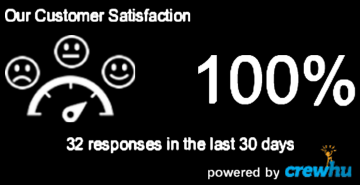
Above and Beyond Customer Service

Corporate Affairs Manager,
Covington, LA
Placing High Value On Safety And Security

General Manager,
Covington, LA
Always delivers as promised!

New Orleans, LA
No Longer Worrying About IT Issues

Owner,
Covington, LA
Great Service that Saves Time and Money

Vice President, Certified Finance & Insurance, Madisonville, LA
Madisonville, LA
A True IT Partner That Keeps Us Running Smoothly
Covington, LA
Taking the best care of our valuable data...

Kenner, LA
Rene and his team have been a tremendous support to our business.
They handle every request with expertise and professionalism
Ener Systems has it all under control...

M.D.
Always looking out for my best interest...
Marrero, LA
You ALWAYS provide us with excellent service.
General Manager
Covington, LA
Ener Systems consistently delivers the prompt and expert service we need
Thank you...

Founder and Principal,
New Orleans, LA
Less Stress, Competitive Pricing, Great Relationship
President,
Covington, LA
I certainly have no qualms about recommending them...
Kenner, LA
ENER has provided significant support for our organization

Ener Systems has been an exceptional partner for our business

One of the Best Business Decisions I Have Made

President,
Pear River, LA
Longtime Client, Longtime Benefit

Exec. VP Engineering,
Covington, LA
Professional, Timely, and Affordable

Executive Director,
New Orleans, LA
I highly recommend you add them to your team

President
Covington, LA
Schedule A Call
Let’s End Your IT Headaches—For Good
You deserve technology that fuels your growth—not drags it down. If your current IT support in Mid-City is too slow, too generic, or simply non-existent, let's talk.
