



March 16, 2026
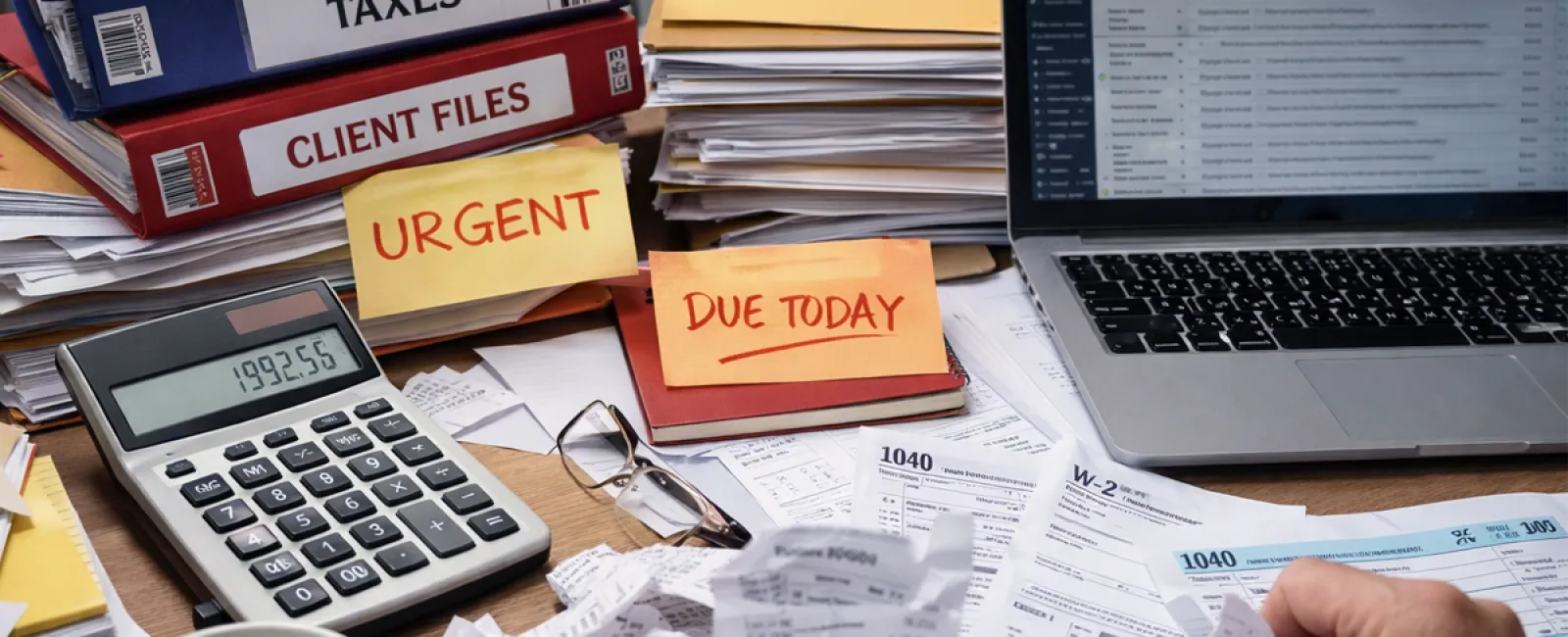
It's March — the peak of tax season.
Your accountant is overwhelmed. Your bookkeeper is rushing against the clock. Deadlines are closing in, and emails are flooding in faster than anyone can manage.
Amid this chaos, everyone is focused on just making it through the month.
This pressure isn't new to you.
But it's not new to cybercriminals either.
Security experts report a sharp rise in phishing scams during tax season, with March experiencing about a 28% surge in tax-related scam emails compared to quieter periods. These deceptive emails don't stand out; they're cleverly disguised as routine business communications just when schedules are tightest.
This isn't coincidence — it's strategic timing.
Let's explore the threats coming your way, and four straightforward ways to shield your business from becoming an easy victim.
The Overloaded Supply Chain Vulnerability
What many miss is this:
Hackers aren't just aiming at accounting firms.
They target the frazzle and confusion fueling tax season.
During tax season:
- Clients hurriedly send sensitive files
- Staff bypass routine checks trying to keep pace
- Requests like "Just send me the file" replace cautious protocol
- Verification steps are skipped due to workload
The entire system accelerates — and speed drives errors.
Cybercriminals don't target calm, methodical companies.
They hunt the overwhelmed.
And March is exactly that kind of month.
Recognizing These Attacks
This isn't fiction.
They arrive as ordinary emails, indistinguishable from the rest.
- A message claiming to be from "your accountant" requesting W-2s to be resent due to a supposed delivery problem
- An email from a vendor stating their bank details have changed and need updating
- A DocuSign notification demanding immediate signature on a tax document
- An urgent request from "your CEO" who is traveling and needs immediate assistance
None raise alarms because they mirror typical March business transactions.
That's the key to their success.
Why Busy Professionals Fall for These Scams
This isn't about carelessness.
It's a human response.
With overflowing inboxes and pressing deadlines, people skim instead of scrutinize. They make assumptions and respond quickly.
Scammers exploit this behavior.
Their emails are crafted for those hurrying to spot the subtle errors they embed. They don't need recklessness, just a busy mind.
And March keeps everyone busy.
Four Easy Steps to Avoid Being an Easy Mark
Good news: You don't need complex cybersecurity tools or a dedicated team to reduce your risk.
A few deliberate habits during hectic periods can protect you:
1. Always verify payment changes by phone
If you receive an email claiming a vendor's banking details have changed, do not reply.
Instead, call the vendor using a trusted number to confirm verbally.
This simple practice blocks many costly scams.
2. Don't rush sensitive information requests
Urgency is a red flag.
If asked for W-2s, tax forms, or financial files "right now," take time to verify.
Legitimate senders will understand a short pause; scammers won't.
3. Confirm urgent requests through separate channels
For urgent emails, follow up by phone, text, or internal message.
This quick check can prevent costly errors.
Genuine urgency withstands a brief verification; fraud does not.
4. Alert your team with a brief heads-up
This week, remind your team that tax season is prime time for scams.
Encourage slowing down, double-checking, and questioning if something feels off.
This small shift can save significant cleanup later.
Final Thoughts
Tax season is stressful enough—avoid adding "fell for a scam" to your worries.
These attacks aren't sophisticated — they're perfectly timed.
They exploit the rush.
They rely on assumptions.
They depend on everyone pushing through March.
No system overhaul is needed to stay safe.
Just pause when it counts and confirm urgent requests.
Often, that's enough to protect your business.
Is Your Busy Season Security Check-Up Due?
Your business might already have strong safeguards in place, which is excellent.
But if tax season tends to push your team into reactive mode, or you're uncertain how urgent requests are handled under pressure, a quick check-up could help with A Quick Call.
No pressure, just a clear assessment of simple habits that could prevent major headaches this season.
If this doesn't apply to you, feel free to share with someone who might benefit.
Click here or give us a call at 985-302-3083 to schedule A Quick Call.


